
Feb 27, 2026 · 5 min read· Summarize in ChatGPT
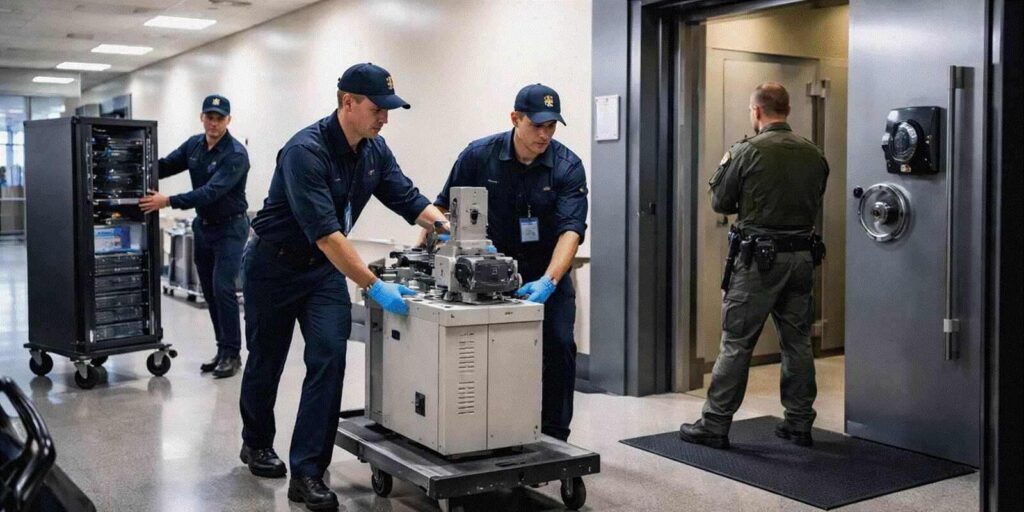
Relocating equipment associated with, adjacent to, or inside a Sensitive Compartmented Information Facility typically requires far more planning than a standard commercial move.

Even when the items being moved are unclassified, a SCIF equipment relocation can affect access control conditions, physical protections, and the assumptions tied to an approved accreditation baseline.
For agencies and contractors operating in secure environments, careful SCIF-adjacent move planning supported by an experienced secure facility relocation partner, such as Moving Masters, helps protect certification status while keeping projects on schedule.
| In This Article: Learn how secure transport methods protect sensitive infrastructure through disciplined chain-of-custody, physical protections, vetted personnel, and risk-aware planning during high-stakes relocation and deployment efforts. |
Why SCIF-Adjacent Moves Require Special Planning
Physical proximity to a SCIF completely changes the risk profile of an otherwise ordinary equipment move. Areas such as hallways, shared entrances, or adjacent rooms may fall under security expectations tied to SCIF accreditation requirements, even if they are not designated classified spaces.
Opening secured doors for carts, staging equipment near SCIF entrances, or rerouting traffic through shared corridors can temporarily alter access controls and monitoring assumptions.
In practice, these temporary changes can prompt questions from security teams about adherence to ICD 705 standards and local security procedures.
Early coordination with the Information System Security Officer, Facility Security Officer, or local SCIF security staff allows relocation activities to be reviewed as a security event rather than a last-minute facilities task.
Having early engagement often determines whether a government’s secure equipment move proceeds smoothly or stalls for approvals.
Understanding Accreditation Boundaries & Impact Zones
Accreditation boundaries extend beyond walls and doors. Floors, ceilings, shared ducts, conduits, and even nearby staging areas can influence how a SCIF’s physical and technical protections perform.
In accredited space-relocation projects, adjacent corridors and loading areas may fall within informal impact zones when used for staging or prolonged access during a move.
Mapping the full move path before scheduling work helps identify where those impact zones appear. Routes that pass SCIF entrances, badge readers, or visitor processing points often require additional controls during peak movement.
Experienced planners look at how long doors remain open, where crews pause with equipment, and whether shared infrastructure could affect sound attenuation or technical protections. That level of coordination supports secure logistics planning that aligns with accreditation assumptions already on file.
Access Control, Escorting & Personnel Requirements
Access management is an area where many classified-environment relocation efforts encounter some degree of difficulty.

Current SCIF guidance discourages access by non-indoctrinated personnel and outlines strict escort requirements when such access is unavoidable. Relocation crews must be properly badged, continuously escorted where required, and limited to approved routes and spaces.
Improper escort coverage, unclear responsibility transfers, or assumptions about badge reciprocity can place the facility in a non-secure posture. That risk extends to temporary conditions, since accreditation decisions often account for how well access controls are maintained during maintenance or relocation activities.
Cleared mover considerations, therefore, include crew composition, escort availability, and documented access procedures for each phase of the move.
Equipment Handling, Staging & Chain-of-Custody
Staging decisions often determine whether a SCIF-adjacent move draws scrutiny. Equipment staged near SCIF entrances or in shared rooms may require added controls based on visibility and proximity.
Security teams frequently treat these staging zones with the same caution as interior spaces, especially when equipment includes storage media or network components.
Chain-of-custody expectations apply even when items are sensitive but unclassified. Federal facility move planning often includes documentation aligned with Controlled Unclassified Information handling practices, such as sign-in logs, custody transfers, and disposition records.
Relocation teams with secure facility experience understand how to document each handoff, supporting accountability and meeting audit expectations for accredited space relocation.
Coordination With Security Officers & Accrediting Authorities
Successful SCIF-adjacent move planning depends on coordination. ISSOs, FSOs, and facility security staff provide guidance on approval workflows, escort rules, and documentation requirements before work begins. Accrediting authorities may request move plans, access diagrams, or staging layouts to confirm that security conditions remain consistent with approved baselines.
Proactive coordination limits rework and schedule delays. When move plans are reviewed early, adjustments to routes, timing, or crew access can be made before equipment arrives on site.
That approach supports secure facility relocation projects that proceed without triggering reassessments or follow-up inspections.
Selecting a Relocation Partner With Secure-Facility Experience
Most general commercial movers are not well-versed in the expectations that come with moving government secure equipment.
Uncontrolled staging, casual door management, or assumptions about access can create conditions that security teams must treat as compliance issues. Partners experienced with ICD 705 environments understand how relocation activity intersects with accreditation boundaries and access controls.
Moving Masters brings decades of experience supporting secure and government-adjacent facilities throughout the Washington, DC region.
Our teams are trained to work within established security procedures, coordinate with site officials, and execute moves that respect the operational realities of SCIF-adjacent environments.
When accreditation is in play, the mover’s experience can matter more than basic logistics, because compliance and process become central.
Protect Accreditation Integrity During SCIF-adjacent Relocations

Protecting certification status during SCIF equipment relocation requires planning, coordination, and a clear understanding of how adjacent activities affect accredited spaces.
Engaging our team at Moving Masters early in the relocation process helps agencies and contractors align SCIF-adjacent move planning with security expectations, access controls, and documentation practices that support ongoing compliance.
With experienced guidance, secure facility relocation projects can move forward without unnecessary disruption to accreditation or mission operations.